Delving Into the World of Silogism
This article explores the intricacies of silogism, a logical reasoning process that forms a fundamental part of deductive reasoning. Silogism is essential in philosophy and critical thinking, often used to derive conclusions from two given premises. Understanding silogism enhances analytical skills, making it crucial for students and professionals alike.

Understanding Silogism: A Logical Foundation
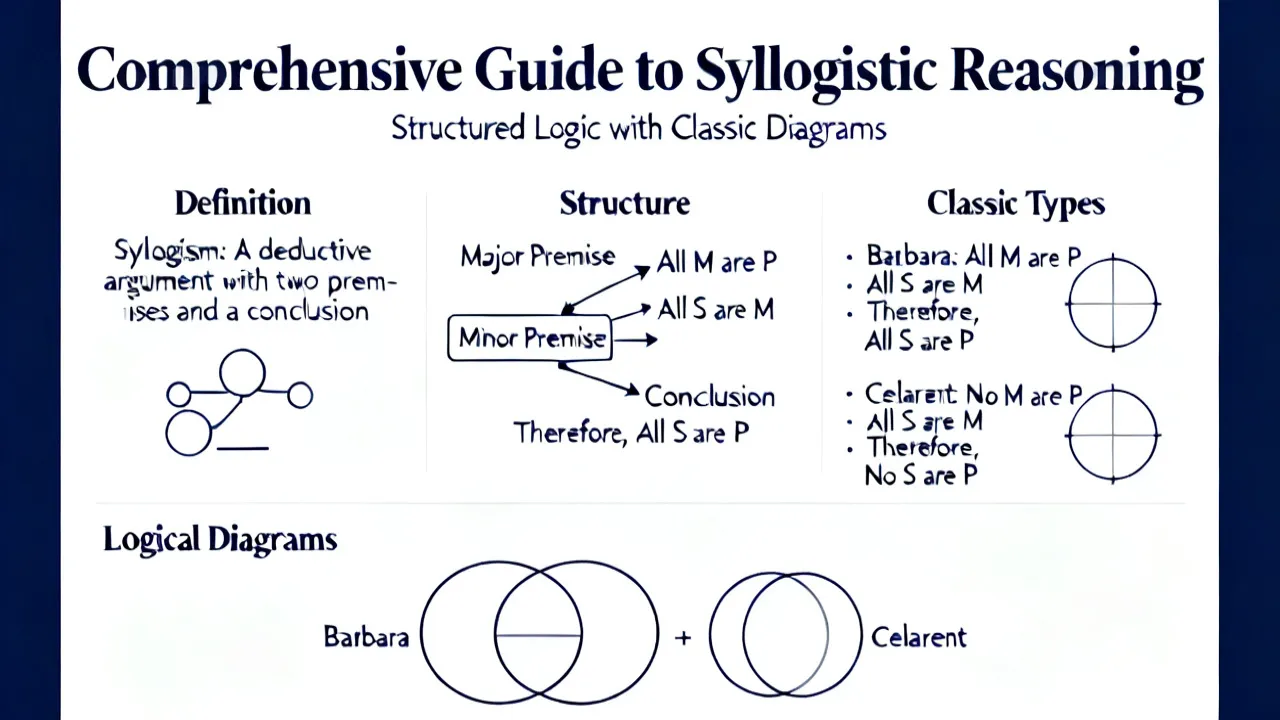
Silogism, rooted in the teachings of ancient philosophers, serves as a cornerstone for critical thinking and deductive reasoning in modern analysis. Employed widely in philosophy, it allows individuals to evaluate arguments and derive conclusions from established premises. In essence, silogism involves three parts: a major premise, a minor premise, and a conclusion, cumulatively forming a logical argument. This structured approach to reasoning has evolved over centuries but retains its critical importance in various domains today.
The Historical Context of Silogism
Originating from ancient Greek philosophy, silogism was extensively analyzed and advocated by Aristotle. Aristotle's introduction of this logical framework paved the way for numerous philosophical and scientific advancements. His focus on structured argumentation set the stage for future generations to build upon the principles of logic and reasoning, influencing both Western and Eastern philosophical traditions. Interestingly, while Aristotle is often regarded as the founder of formal logic, variations of logical reasoning can also be found in Eastern philosophies, such as those in Ancient China and India, highlighting the universality of the quest for rational thought throughout history.
In the centuries following Aristotle's seminal work, philosophers such as Immanuel Kant, George Boole, and Gottlob Frege further expanded on silogistic principles, integrating them with emerging scientific methodologies and paving the way for modern logic. The transition from a classical to a more nuanced understanding of logic illustrates the adaptability of silogism as both a theory and practical tool for fostering clear thought and argumentation.
Components of a Silogism
Understanding silogism necessitates an in-depth examination of its components:
- Major Premise: This statement outlines a broad fact or accepted truth. E.g., "All humans are mortal."
- Minor Premise: This provides a specific instance related to the major premise. E.g., "Socrates is a human."
- Conclusion: Derived from the premises, it combines the logical assertion into a new proposition. E.g., "Therefore, Socrates is mortal."
Each of these components is critically important in forming a valid silogism. A well-structured argument depends heavily on the truth and relevance of the premises presented. If one component is flawed or inaccurate, the conclusion may be misled, leading to erroneous judgments or decisions. This intrinsic relationship between premises and conclusions necessitates a meticulous approach to constructing arguments based on silogism.
Silogism in Modern Applications
Beyond philosophy, silogism plays a crucial role in various disciplines — from legal reasoning to computer science. For example, in artificial intelligence (AI), silogistic principles help in designing algorithms that require logical deductive reasoning. AI applications often utilize these principles to improve natural language processing, enabling machines to understand and generate human-like text based on logical structures. This has enormous implications across numerous fields, particularly in search engines, virtual assistants, and automated systems meant to interpret human intent accurately.
Similarly, in law, constructing arguments based on assured premises ensures a structured approach to legal analysis and judgments. Legal reasoning often employs silogistic structures to uphold justice in courtrooms, where lawyers must formulate sound arguments and anticipate counterarguments grounded in logic. Thus, the grueling process of crafting a compelling case in court necessitates a strong grasp of silogism, emphasizing its practicality in real-world scenarios.
Furthermore, the realm of education has also embraced silogistic reasoning as a critical pedagogical approach. In subjects ranging from science to ethics, students are encouraged to develop their ability to formulate logical arguments, dissect claims, and establish evidence-based conclusions. This fosters not only academic proficiency but also equips students with essential skills for their futures, regardless of their chosen fields.
Comparative Analysis: Classical vs. Modern Logic
| Aspect | Classical Silogism | Modern Logic |
|---|---|---|
| Structure | Aristotelian framework with strict format. | Incorporates Boolean algebra and predicate logic. |
| Application | Philosophical debates, traditional logic. | Computer science, linguistics, advanced mathematics. |
| Flexibility | Rigid fixed premises. | Allows dynamic and probabilistic reasoning. |
The contrasting features of classical and modern logic highlight the evolution of the field. Classical silogism, with its rigid structures, provides a foundational understanding of logical principles, while modern logic’s flexibility allows for a more nuanced consideration of truth and reasoning. The integration of symbolic representations and methodologies in modern logic encourages exploration beyond traditional barriers, accommodating the complexities inherent in contemporary thought processes.
Challenges in Mastering Silogism
While silogism simplifies understanding basic logical reasoning, challenges abound in its application. Errors often arise from incorrectly formed premises, leading to fallacious conclusions. One common fallacy in silogistic reasoning is the fallacy of the undistributed middle, where the major and minor premises do not share a common term in a meaningful way. Misunderstandings also occur if premises are overly broad or ambiguous, compromising the strength and validity of the conclusion.
Addressing these issues requires rigorous training in logical formulation and critical analysis. Engaging in debates, participating in discussion groups, or working through logical puzzles can enhance one’s proficiency in silogism. In educational settings, teaching methodologies often incorporate these activities to provide students with practical experience in applying silogistic principles effectively, reinforcing their learning through active engagement and practice.
Moreover, the rise of cognitive biases—systematic patterns of deviation from norm or rationality in judgment—poses additional hurdles to mastering silogism. Individuals may unconsciously allow their emotions, preconceived notions, or societal influences to affect their logical reasoning capabilities. Being aware of and countering these biases is imperative for clear reasoning and maintaining the integrity of logical arguments.
Influence on Critical Thinking
The incorporation of silogism in educational curricula underscores its significance in fostering critical thinking competencies. By refining students' ability to dissect arguments and discern valid conclusions, silogism spearheads the development of analytical acumen applicable across various fields of study. In an information-saturated world, the capacity to evaluate the credibility of sources and draw logical inferences from the data presented is invaluable.
Critical thinking extends beyond merely understanding logic; it encompasses the ability to apply these skills in real-world contexts. Whether considering personal decisions, evaluating news reports, or engaging in civic discussions, the lessons from silogism equip individuals to navigate complex situations with informed reasoning. As societies increasingly face multifaceted issues, the demand for individuals who can think critically, argue effectively, and partake in civil discourse becomes paramount.
Furthermore, teaching silogism cultivates open-mindedness, fostering an environment where individuals can evaluate diverse viewpoints with fairness and rationality. This aspect is particularly significant in a pluralistic society, where differing opinions can lead to heated debates. Understanding and applying logical reasoning not only enhances one’s own arguments but also strengthens the ability to critique the arguments put forth by others constructively.
Practical Applications in Everyday Life
In everyday life, silogism can be utilized in making important decisions. By organizing thoughts and considerations into clear premises and conclusions, individuals can weigh options systematically. For instance, a person deciding between two job offers might elaborate their reasoning as follows:
- Major Premise: A higher salary increases financial stability.
- Minor Premise: Job A offers a higher salary than Job B.
- Conclusion: Therefore, Job A provides better financial stability than Job B.
This approach not only leads to better decision-making but also clarifies thought processes, making it easier to communicate rationale to others. Additionally, understanding silogism enhances discourse in personal relationships, as partners can articulate their views more effectively while minimizing misunderstandings.
FAQs
- What is a silogism? - A silogism is a three-part deductive reasoning process involving two premises and a conclusion.
- Why is silogism important? - It is essential for logical reasoning, enabling structured analysis and argument formulation.
- How is silogism applied today? - It is used in artificial intelligence, legal reasoning, and enhancing critical thinking skills.
- Can silogism be used in everyday decision-making? - Yes, comprehending and applying logical arguments assists in making well-reasoned decisions.
Conclusion: The Timelessness of Silogism
Silogism remains as relevant today as it was in Aristotle’s time. Its application in everyday reasoning, academic endeavors, and professional tasks underscores its status as a fundamental tool for logical analysis. Cultivating competency in silogism empowers individuals to navigate complex arguments with precision and confidence, affirming its enduring legacy in the realm of thought and analysis. As long as debate, discussion, and discourse exist, the structured principles of silogism will continue to provide clarity and rigor for reasoned argumentation, ensuring that individuals can engage with the world thoughtfully and effectively.
Additional Perspectives on Silogism
Delving deeper into silogism, it is pertinent to recognize how its principles extend beyond mere academic or theoretical applications. The utilization of silogistic structures aligns closely with emotional intelligence, particularly in social interactions. When individuals apply logical reasoning to understand varying perspectives, they become more equipped to navigate complex interpersonal dynamics. This skill not only applies within professional realms but also fosters healthier relationships by promoting clarity and reducing the likelihood of conflict.
Furthermore, silogism can enhance creativity in problem-solving scenarios. By utilizing logical frameworks, individuals can iterate through potential solutions in a methodical manner, evaluating the advantages and disadvantages of each based on established criteria. This process enables a more structured approach to brainstorming and innovative thinking, as it balances creativity with logical rigor, leading to well-thought-out solutions.
The significance of silogism is also evident when considering its relevance in the era of misinformation and digital communication. As society grapples with the challenges posed by misinformation, the ability to discern and construct sound arguments becomes increasingly vital. Educational initiatives focusing on critical thinking and logical reasoning are essential for empowering individuals to navigate the complexities of the digital landscape. Training individuals in silogistic reasoning fosters a discerning attitude towards information consumption, equipping them to engage in informed discussions and challenge unsubstantiated claims effectively.
The Future of Silogism
The continued evolution of logic and reasoning reflects societal trends and technological innovations. As artificial intelligence models increasingly rely on complex algorithms to simulate logical reasoning, understanding the foundations of silogism will be critical for those working in tech fields. Future research in cognitive science also points towards the integration of silogistic principles into everyday software applications, aiming to enhance user experiences by enabling machines to interact with humans in a more contextually informed manner.
In conclusion, the exploration of silogism reveals a rich tapestry of ideas interwoven with human thought and interaction. As we recognize and appreciate its multifaceted influence extending across disciplines and aspects of life, we acknowledge silogism not merely as a relic of ancient philosophy but as a dynamic, living framework that continues to shape our understanding of logic and reasoning today—and into the future. Whether through enhanced decision-making, improved communication, or heightened critical analysis, silogism remains a tool of profound significance in navigating the vast landscape of human thought.