Understanding Silogism: A Logical Framework
This guide delves into the concept of silogism, a crucial element in logic and philosophy, highlighting its role in deductive reasoning. Silogism is a structured form of reasoning, traditionally consisting of two premises followed by a conclusion. It relies on the logical relationship between the premises to deduce an accurate conclusion, playing a significant role in various fields including philosophy, mathematics, and computer science.
Exploring the Concept of Silogism
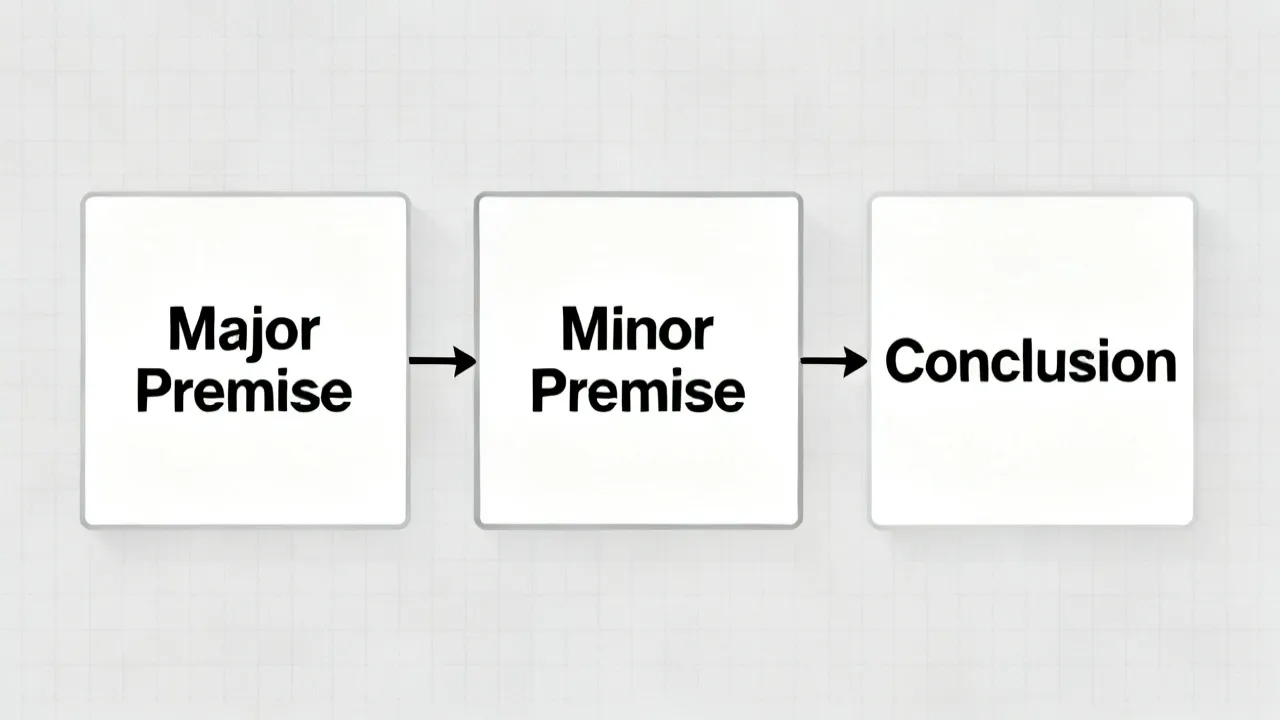
Silogism, often spelled "syllogism," is fundamental to logical reasoning and philosophical analysis. At its core, a silogism is a form of deductive reasoning that encompasses a major premise, a minor premise, and a conclusion. This tripartite structure forms the backbone of logical argumentation, allowing for conclusions that, when correctly drawn, are undeniably valid based on the given premises. In understanding silogism, one unearths not only its inherent simplicity but also the profound complexities it can yield when intricately intertwined with human thought and reasoning.
The Structure of Silogism
The classical form of silogism comprises three critical components, which serve as the foundation for constructing sound logical arguments:
- Major Premise: This premise presents a general statement or universal truth. For instance, "All humans are mortal." This statement indicates a general condition applicable to all members of the group defined as "humans."
- Minor Premise: This introduces a specific case related to the major premise. For example, "Socrates is a human." Here, we apply the generality of the major premise to a specific instance within that broader category.
- Conclusion: Derived from the premises, the conclusion follows logically. Based on the examples above, the conclusion would be "Socrates is mortal." This final statement conclusively links the specific instance back to the general rule established in the major premise.
Types of Silogism
Silogism can be categorized into various types based on the nature and structure of the premises and the conclusion drawn:
- Categorical Silogism: Involves statements that begin with "all," "no," or "some." For example, consider the argument: "All birds are animals. All sparrows are birds. Therefore, all sparrows are animals." This type relies on the delineation of categories and their attributes.
- Hypothetical Silogism: Utilizes "if… then…" scenarios, which allow for reasoning based on conditional relationships. For instance, "If it rains, the ground will be wet. It is raining. Hence, the ground is wet." This illustrates how premises can lead to conclusions that are contingent upon certain conditions being met.
- Disjunctive Silogism: Involves either-or statements, providing a logical structure that leads to decisive conclusions based on the negation of presented alternatives. For example: "This letter is either an offer or a rejection. It is not an offer. Thus, it is a rejection." Here, the conclusion is reached by eliminating one of the stated options.
The Role of Silogism in Logic
Silogism forms the foundational structure of logical deduction. The validity of a silogism is contingent upon the logical structure of the argument rather than the truth of the premises themselves. As such, a logically valid argument can lead to false conclusions if one or more premises are incorrect. This discernment is crucial in various fields, including mathematics, computer science, and artificial intelligence, where logical systems are constructed and evaluated. Furthermore, in everyday life, silogisms help navigate complex decisions by providing a clear framework that guides reasoning, thus promoting rational thought and discourse.
Historical Context and Influence
Silogism has its roots in Aristotle's philosophy, illustrating its profound impact on Western logical thought. Aristotle's systematic treatises on logic, collectively known as the "Organon," laid the groundwork for logical analysis as a discipline. His work established a systematic approach to categorizing arguments, employing silogistic reasoning as a tool for philosophical inquiry. Through the ages, silogism has influenced a myriad of philosophical inquiries and developments, from medieval scholasticism to contemporary analytical philosophy. Aristotelian Logic has also laid the foundations for scientific methods, contributing to advancements in a wide array of fields such as mathematics, physics, and even social sciences, where clarity of thought is essential.
A Comparison of Different Silogism Types
| Silogism Type | Description |
|---|---|
| Categorical Silogism | Focuses on categorizing beliefs based on universality, particularity, or negation. It assesses relationships between different categories or classes and derives conclusions based on their inclusivity. |
| Hypothetical Silogism | Centers on conditional ("if…then…") statements, enabling reasoning that is contingent upon certain scenarios or events taking place. |
| Disjunctive Silogism | Involves decisions between mutually exclusive choices. This type is especially effective in determining outcomes based on the elimination of options. |
Applications of Silogism in Modern Contexts
The application of silogism extends beyond theoretical philosophy, influencing modern decision-making processes, problem-solving strategies, and argument formulation. In diverse fields such as law, ethics, and computer science, where logical clarity is paramount, the principles of silogism guide the development of coherent and rational conclusions. For example, in legal arguments, lawyers often employ categorical syllogisms to outline their cases, presenting general laws and applying them to specific instances, ultimately guiding a jury's understanding toward a conclusion that aligns with the presented premises.
Moreover, in the realm of artificial intelligence, the use of logical reasoning techniques rooted in silogistic structures has paved the way for advancements in natural language processing and machine learning. Algorithms that rely on logical deductions can enhance machines’ understanding of human language and reasoning, facilitating more effective human-computer interactions. This interdependence highlights the significant role that logical structures, including silogism, play in bridging theoretical constructs with practical applications in technology and critical thinking.
Common Misconceptions About Silogism
Despite its significance, many misconceptions surround silogism. One common misunderstanding is the belief that all valid syllogisms are also sound; however, to be sound, a syllogism must contain true premises in addition to a valid structure. For example, consider the syllogism:
- Major Premise: "All cats are reptiles."
- Minor Premise: "Whiskers is a cat."
- Conclusion: "Whiskers is a reptile."
While this syllogism is structurally valid, it is not sound because the major premise is false. Thus, one can only ensure that conclusions drawn from premises are valid, not necessarily truthful if the premises themselves lack genuine validity.
Another misconception is the assertion that silogism can only be applied in formal arguments or high-level philosophical discourse. On the contrary, silogistic reasoning permeates everyday life, influencing how people reason about decisions, form opinions, and engage in discussions. Recognizing and understanding silogistic structures in daily conversations can enhance clarity and promote effective communication. By actively practicing these structures, individuals can refine their reasoning processes and improve their argumentative skills.
FAQs
- What are the main types of silogism?
The main types include categorical, hypothetical, and disjunctive silogism. Each type has its unique application and significance in logical discourse. - How is silogism relevant in modern contexts?
Silogism aids in logical reasoning in diverse fields, ensuring clear and coherent argumentation that can uphold ethical and legal integrity while driving technological advancements. - Can silogism lead to incorrect conclusions?
Yes, if one or more premises are false, the conclusion may not reflect the truth despite being logically valid, emphasizing the importance of scrutinizing premises before accepting conclusions as true. - How can one improve their silogistic reasoning?
Engaging in exercises that involve constructing syllogisms, analyzing arguments, and participating in debates can enhance one's understanding and application of silogistic reasoning in everyday situations.
Conclusion
Silogism remains a pivotal element of logical reasoning, maintaining its significance from classical philosophical discourse to contemporary applications across various domains. Its structured approach to deduction underlines the importance of coherent and valid argumentation, thereby ensuring sound reasoning in both academic and practical scenarios. The relevance of silogism in diverse fields, from law to artificial intelligence, demonstrates its enduring nature as a foundational tool for critical thinking and rational discourse. Consequently, embracing and understanding silogistic principles not only enriches philosophical inquiry but also empowers informed decision-making and effective communication in our daily lives.